
Diesel Gas Oil 50 ppm
Gasoil with a 50 ppm sulfur limit is the road and industrial diesel of markets that have left high-sulfur fuel behind but have not yet adopted the 10 ppm standard.
A step between two standards
Fifty parts per million was the European road limit from 2005 until 10 ppm replaced it in 2009. Many countries in Africa, Asia and Latin America set their current diesel limit at this level.
No single international standard governs the grade today. Each buyer's national specification decides cetane, density and flash point, so the enquiry should attach it.
- Product type
- Low-sulfur diesel, a middle distillate
- Governing standards
- The national standard of the destination market
- Sold by
- The metric ton or the barrel
- Typical buyers
- Fuel distributors, mining and industrial operators, power producers
- Carried in
- Clean product tankers
What buyers specify
| Property | Reference | Why it matters |
|---|---|---|
| Sulfur | 50 mg/kg maximum | Protects particulate filters and catalysts. It is the first figure a buyer checks. |
| Cetane number | Set nationally, commonly 46 to 51 minimum | Measures how readily the fuel ignites. Higher values give smoother combustion. |
| Density at 15 °C | Commonly 820 to 860 kg/m³ | Converts volume to weight and indicates energy content. |
| Flash point | Commonly 55 °C to 66 °C minimum | A safety limit for storage and handling. |
| Cold flow | Set by the climate of the destination | The temperature at which wax blocks a fuel filter. Winter grades go lower. |
Ranges are typical of traded material, given for orientation. The specification written into the sales contract governs.
How the grade is supplied
Automotive gasoil 50 ppm
Road diesel for vehicles built to Euro 4 emission rules or their equivalents.
Industrial and off-road gasoil
The same sulfur grade supplied for mining, construction, farming and generators.
Neighboring grades
Gasoil at 10 ppm and at 500 ppm trades alongside it. Price differences follow the sulfur limit.
Storage and shipping
- Cargo sizes. Medium-range product tankers carrying roughly 30,000 to 40,000 tonnes are the usual parcel.
- Segregation. Stored and shipped apart from higher-sulfur gasoil so that the parcel stays within its limit.
- Inspection. An independent inspector normally samples and certifies the parcel at the loading port.
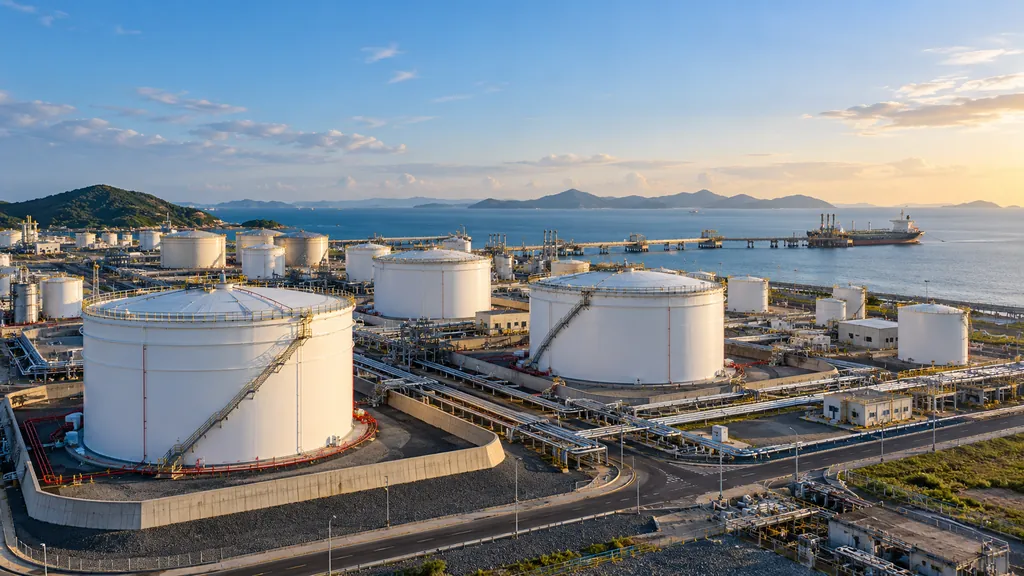
Storage and transport are provided by third-party terminal operators and carriers. We coordinate them. How storage and shipping are arranged
What to send with your enquiry
- The national specification the product must meet
- End use: road, industrial or power
- Quantity in tonnes and how often you need it
- Destination port or terminal and preferred Incoterm
- Delivery window
Send these details and we will tell you whether we can source the product and on what terms. Price, quantity and specification are fixed in the sales contract.