
Gasoline RON 92
RON 92 is the regular grade across much of Asia, the Middle East, Africa and Latin America, and a benchmark grade of the Singapore market.
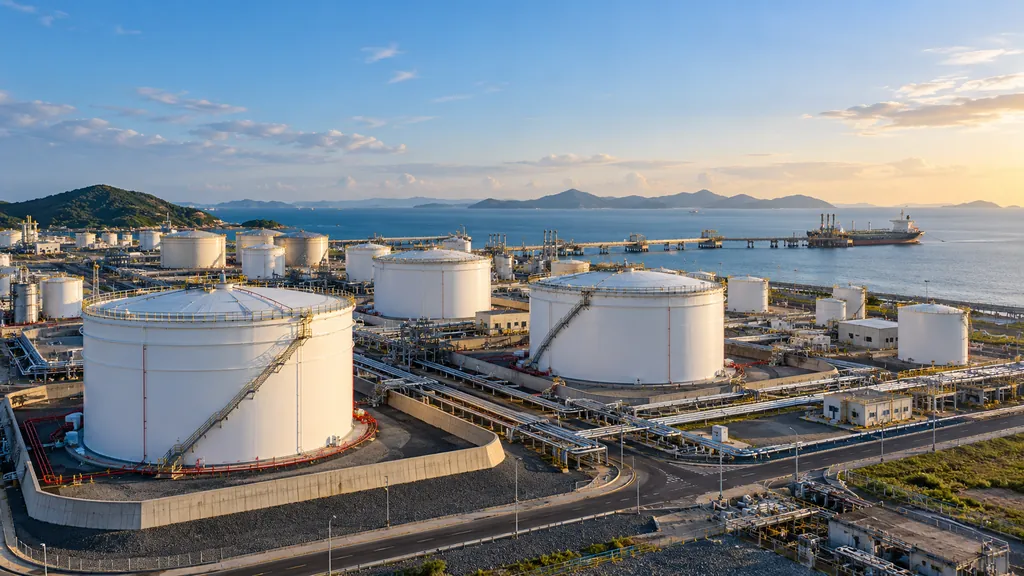
The volume grade
Engines with moderate compression run well on 92 octane, which costs less to refine than higher grades. That keeps it the volume grade wherever fuel price matters most.
No single international standard covers it. National specifications set the sulfur limit, which runs from 10 ppm in the strictest markets to 500 ppm or more in others.
- Product type
- Regular unleaded gasoline
- Governing standards
- The national standard of the destination market
- Priced against
- 92 RON in Singapore
- Typical buyers
- Fuel distributors and national oil companies
- Carried in
- Clean product tankers
What buyers specify
| Property | Reference | Why it matters |
|---|---|---|
| Research octane number | 92 minimum | Resistance to knock under light load. It is the number shown at the pump. |
| Motor octane number | Set nationally, commonly 82 or 83 minimum | Resistance to knock under heavy load and high engine speed. |
| Sulfur | Set nationally, from 10 to 500 mg/kg or more | Protects the catalytic converter. |
| Benzene | Set nationally | A health limit. Benzene is a carcinogen. |
| Density at 15 °C | Commonly 720 to 775 kg/m³ | Converts volume to weight and indicates energy content. |
| Vapor pressure | Set by climate; lower limits apply in hot markets | Controls evaporation in heat and starting in cold. It changes with the season. |
Ranges are typical of traded material, given for orientation. The specification written into the sales contract governs.
How the grade is supplied
Regular unleaded, RON 92
The base grade in markets that sell 92 beside 95 and 97 or 98.
Singapore 92 RON
The price reference for gasoline cargoes across Asia.
Sulfur variants
The same octane grade is supplied at different sulfur limits to suit each market's rules.
Storage and shipping
- Cargo sizes. Medium-range product tankers carrying roughly 30,000 to 40,000 tonnes are the usual parcel.
- Volatility. Gasoline is the most volatile clean product. Vapor control applies at loading and discharge.
- Blendstocks. Cargoes often ship as blendstock and are finished with ethanol at the destination terminal.
- Inspection. An independent inspector normally samples and certifies the parcel at the loading port.
Storage and transport are provided by third-party terminal operators and carriers. We coordinate them. How storage and shipping are arranged

What to send with your enquiry
- Octane grade and the governing standard
- Ethanol content, or blendstock for later blending
- Sulfur limit and the season of delivery
- Quantity in tonnes and how often you need it
- Destination port or terminal and preferred Incoterm
- Delivery window
Send these details and we will tell you whether we can source the product and on what terms. Price, quantity and specification are fixed in the sales contract.